Saint Pierre and Miquelon
North AmericaTerritory
Drag to pan · scroll to zoom · click a country to open it
About
Saint Pierre and Miquelon, officially the Territorial Collectivity of Saint Pierre and Miquelon, is a self-governing territorial overseas collectivity of France in the northwestern Atlantic Ocean, located near the Canadian province of Newfoundland and Labrador. St. Pierre and Miquelon is an archipelago of eight islands, covering 242 km2 (93 sq mi) of land. It had an estimated population of 5,513 in 2026 and its residents are French citizens; they elect their own deputy to the National Assembly and participate in senatorial and presidential elections.
Read more on Wikipedia →The Flag
History
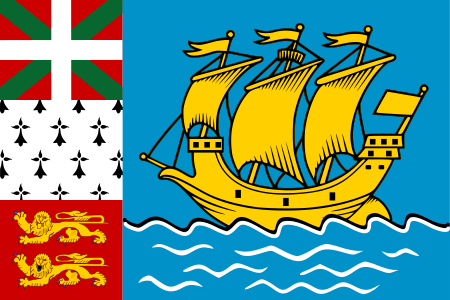
The French overseas collectivity of Saint Pierre and Miquelon does not have an official flag, but an unofficial flag based on the islands' official coat of arms is commonly flown by locals. French law neither authorises nor prohibits the use of the unofficial flag by local officials, and it has appeared on official documents and in front of government buildings alongside the French flag. The unofficial flag has also been flown by civilian vessels as a civil ensign.
Design & symbolism
The elements of the unofficial flag of Saint Pierre and Miquelon reflect the archipelago's history and people. The flag is a blue field charged with a yellow silhouette of the Grande Hermine, the sailing ship that French explorer Jacques Cartier was on when he first reached the island of Saint Pierre on 15 June 1536. Most of Saint Pierre and Miquelon's residents trace their ancestry back to the Basque Country, Brittany or Normandy, so the flag's hoist accordingly features those three regions' flags arranged vertically (the Ikurrina, the ermine canton of the Gwenn ha Du, and the Norman flag, respectively).
Photos


