Saint Lucia
Caribbean
Drag to pan · scroll to zoom · click a country to open it
About
Saint Lucia is an island country in the eastern Caribbean. Part of the Windward Islands of the Lesser Antilles, it is located north/northeast of the island of Saint Vincent, northwest of Barbados and south of Martinique. It covers a land area of 617 km2 (238 sq mi) with an officially estimated population of over 184,100 people as of mid 2023. The nation's capital and largest city is Castries.
Read more on Wikipedia →The Flag
History
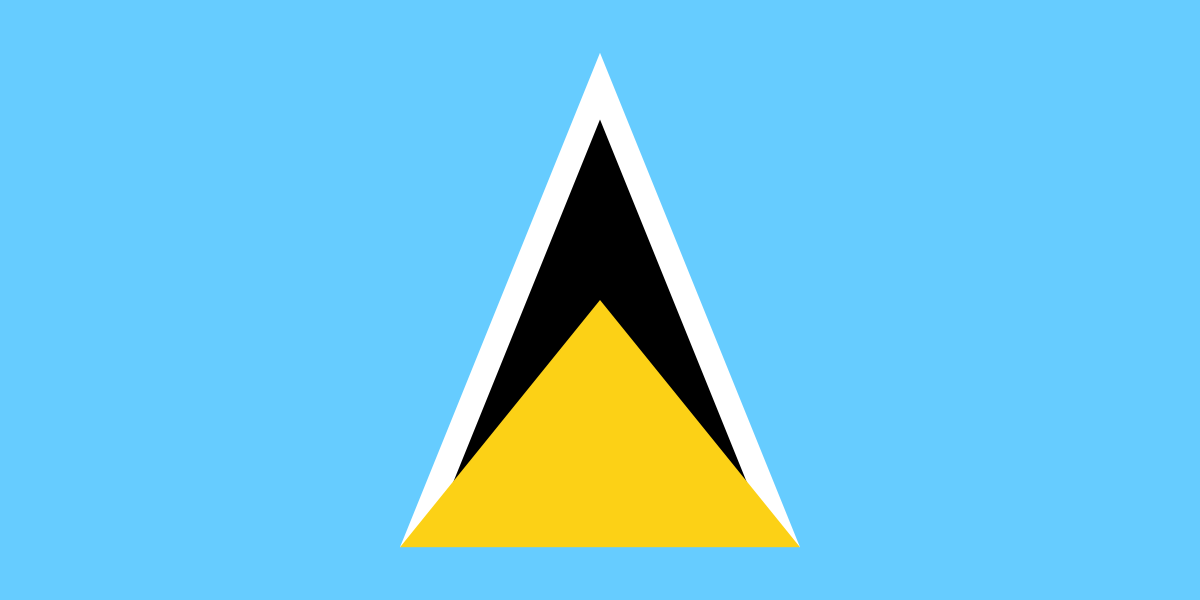
The national flag of Saint Lucia consists of a cerulean blue field charged with a golden triangle in front of a white-edged black isosceles triangle. Adopted in 1967 to replace the British Blue Ensign defaced with the arms of the colony, it has been the flag of Saint Lucia since the country became an associated state of the United Kingdom that year. Although the overall design of the flag has remained unchanged, specific aspects of it have been altered over the years.
Design & symbolism
The colours and symbols of the flag carry cultural, political, and regional meanings. The blue epitomises the sky and the sea, specifically the Atlantic Ocean and Caribbean Sea which encircle the country. The black and white allude to the harmonious relationship between the black and white races. The yellow symbolises the sunshine, as well as prosperity. The triangles represent the Pitons, which are twin volcanic cones located in the southwest part of the island and unity; Gros Piton and Petit Piton are a national symbol of Saint Lucia.
Photos

