Guinea-Bissau
Western Africa
Drag to pan · scroll to zoom · click a country to open it
About
Guinea-Bissau, officially the Republic of Guinea-Bissau, is a country in West Africa that covers 36,125 square kilometres (13,948 sq mi) with an estimated population of 2,080,000. It borders Senegal to its north and Guinea to its southeast.
Read more on Wikipedia →The Flag
History
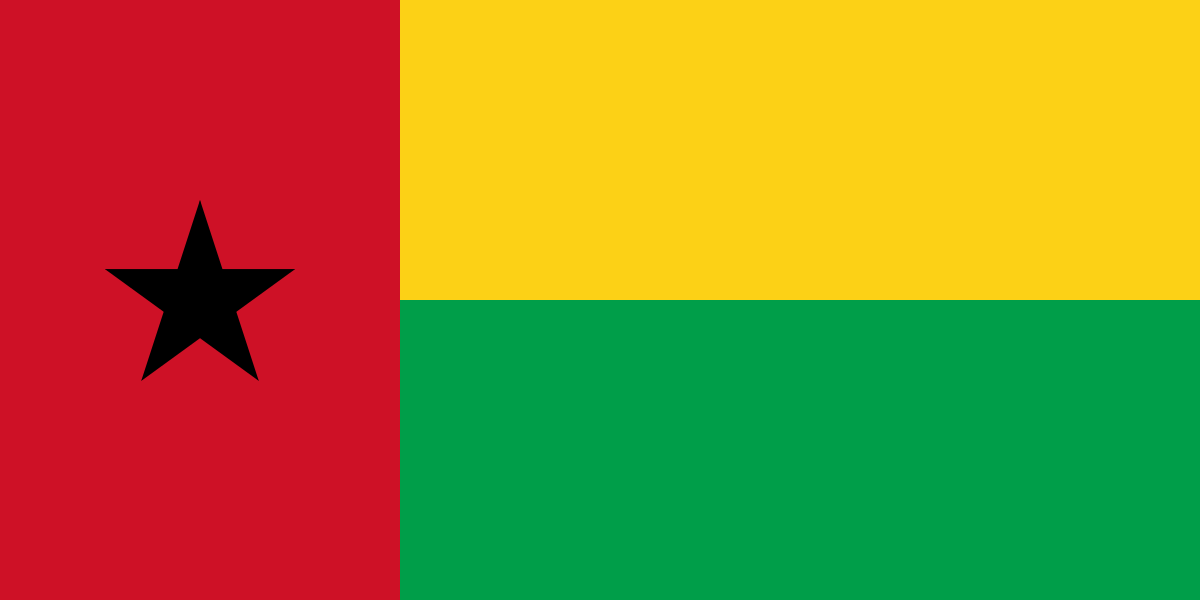
The national flag of Guinea-Bissau was adopted on the day Guinea-Bissau proclaimed its independence from Portugal in 24 September 1973. It is almost identical to the flag of the African Party for the Independence of Guinea and Cape Verde, the country's dominant party and previously sole ruling party.
Design & symbolism
Like the flag of Cape Verde upon independence, the flag of Guinea-Bissau is based on that of the African Party for the Independence of Guinea and Cape Verde (PAIGC), which is the same but with the party's initials below the black star. The party adopted its flag in 1961, echoing the Pan-African colours used by the existing flags of neighbouring Ghana and Guinea, namely red, yellow, and green. The black star symbolises the leadership of the PAIGC, with its colour representing the people of Africa. Yellow and green correspond to Guinea-Bissau's northern savannas and southern forests, respectively, and broadly speaking the yellow is said to refer to agriculture and the fruits of labour, while green is said to represent the agriculture in the jungle. The yellow is also sometimes reported to represent the Sun or mineral wealth, green represents hope, and red represents bloodshed in the revolution. There has not been legislation on the specific shades of these colours, but these have been used as standards by such organisations as Olympic Games.
Photos


