Bahamas
Caribbean
Drag to pan · scroll to zoom · click a country to open it
About
The Bahamas, officially the Commonwealth of The Bahamas, is an archipelagic country in the Caribbean located within the Lucayan Archipelago in the Atlantic Ocean. The country comprises 700 islands, and more than 2,500 cays in the Atlantic Ocean, located north of Cuba and north-west of the island of Hispaniola and the Turks and Caicos Islands, southeast of the US state of Florida and east of the Florida Keys. The capital and largest city is Nassau on the island of New Providence. The Royal Bahamas Defence Force describes the Bahamas' territory as encompassing 470,000 km2 (180,000 sq mi) of ocean space.
Read more on Wikipedia →The Flag
History
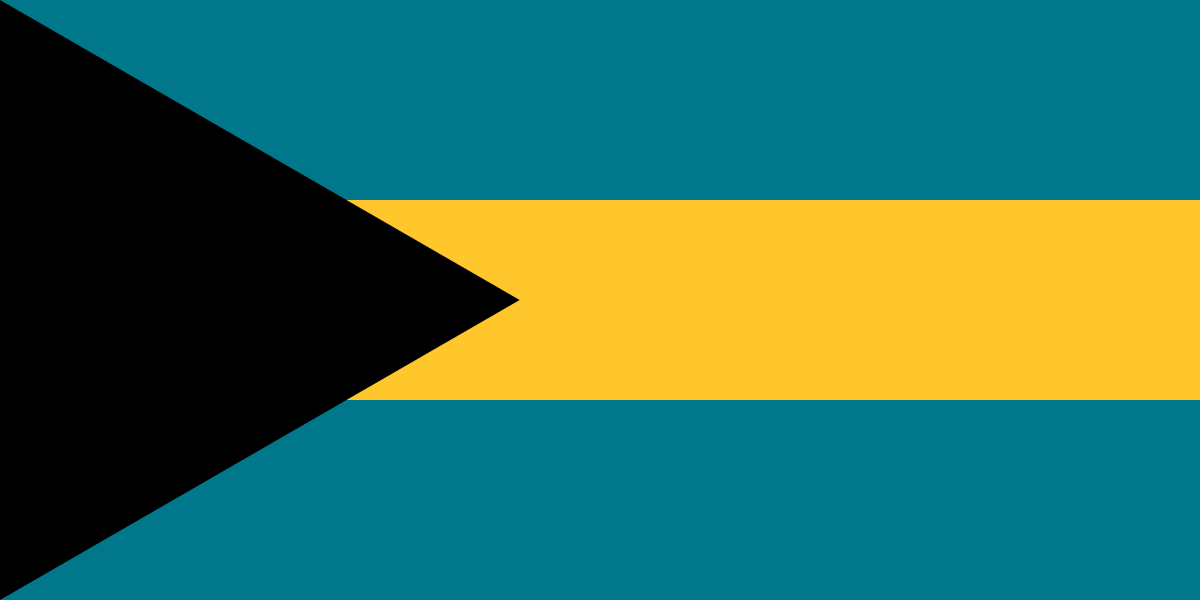
The national flag of the Commonwealth of The Bahamas consists of a black triangle situated at the hoist with three horizontal bands: aquamarine, gold and aquamarine. Adopted in 1973 to replace the British Blue Ensign defaced with the emblem of the Crown Colony of the Bahama Islands, it has been the flag of The Bahamas since the country gained independence that year. The design of the present flag incorporated the elements of various submissions made in a national contest for a new flag prior to independence.
Design & symbolism
The colours of the flag carry cultural, political, and regional meanings. The gold alludes the shining sun – as well as other key land-based natural resources – while the aquamarine epitomises the water surrounding the country. The black symbolises the "strength", "vigour, and force" of the Bahamian people, while the directed triangle evokes their "enterprising and determined" nature to cultivate the abundant natural resources on the land and in the sea.