Benin
Western Africa
Drag to pan · scroll to zoom · click a country to open it
About
Benin, officially the Republic of Benin, formerly known as Dahomey, is a country in West Africa. Benin is bordered by Togo to the west, Nigeria to the east, Burkina Faso to the northwest, and Niger to the northeast. The majority of its population lives on the southern coastline of the Bight of Benin, part of the Gulf of Guinea in the northernmost tropical portion of the Atlantic Ocean. The capital is Porto-Novo, and the seat of government is in Cotonou, the most populous city and economic capital. Benin covers an area of 112,622 km2 (43,484 sq mi), and its population in 2021 was estimated to be approximately 13 million. It is a tropical country with an economy heavily dependent on agriculture and the exports of palm oil and cotton.
Read more on Wikipedia →The Flag
History
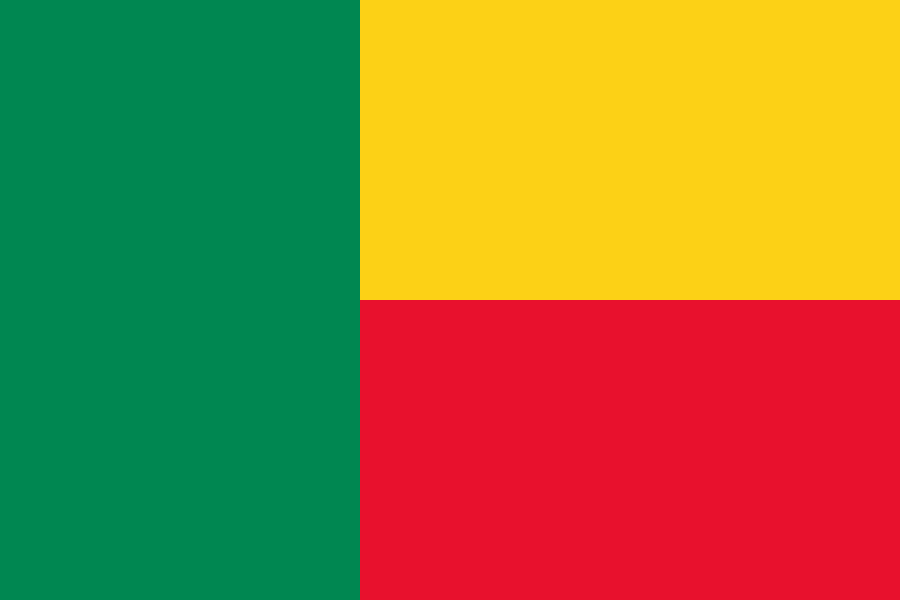
The national flag of Benin is a flag consisting of two horizontal yellow and red bands on the fly side and a green vertical band at the hoist. Adopted in 1959 to replace the French Tricolour, it was the flag of the Republic of Dahomey until 1975, when the People's Republic of Benin was established. The new regime renamed the country and changed the flag to a green field with a red star in the canton. This version was utilized until multi-party democracy was re-established in 1990, coinciding with the Revolutions of 1989. The new government promptly restored the original pre-1975 flag.
Design & symbolism
The colours of the flag carry cultural, political, and regional meanings. As stated in the national anthem, the green of the flag represents the hope of a new democracy. The red represents the courage of the ancestors, and the yellow is for the treasures of the nation. On a continental level, the yellow, green and red represented the Pan-Africanist movement; the three colours were utilized by the African Democratic Rally, a political party representing the interests of French West Africa in the National Assembly of France at the time of decolonization. Furthermore, the colours are the same as the ones utilized in the flag of Ethiopia. This honours the oldest independent country in Africa and the only nation other than Liberia to remain independent during the Scramble for Africa.
Photos


