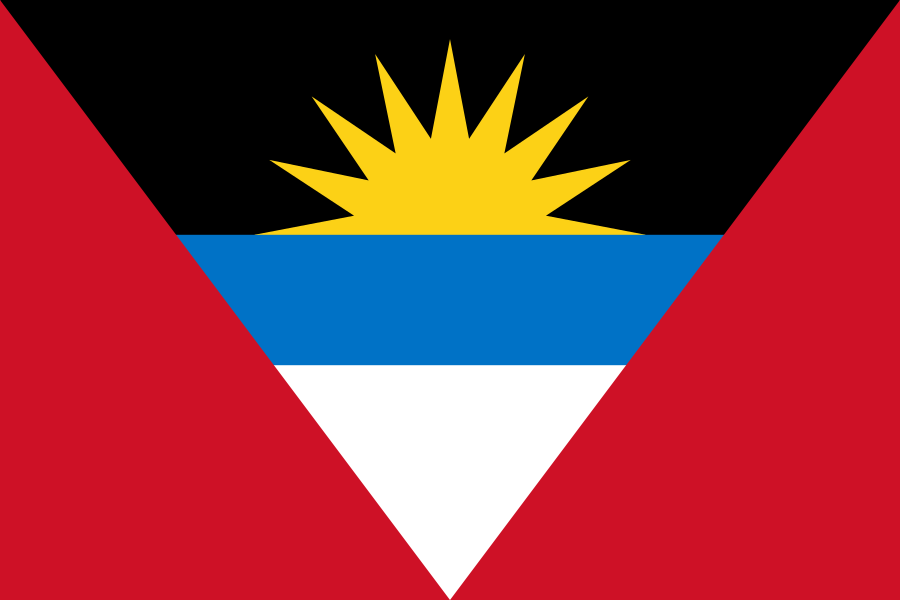
Antigua and Barbuda
Caribbean
Drag to pan · scroll to zoom · click a country to open it
About
Antigua and Barbuda is an archipelagic country in the Caribbean composed of Antigua, Barbuda, and dozens of other small islands. Antigua and Barbuda has a total area of 440 km2, making it one of the smallest countries in the Caribbean. The country is mostly flat, with the highest points on Antigua being in the Shekerley Mountains and on Barbuda the Highlands. The country has a tropical savanna climate, with pockets of tropical monsoon in Antigua's southwest. Its most populated city is St. John's, followed by All Saints and Bolans. The sole settlement in Barbuda is Codrington. Most of the country resides in the Central Plain that stretches from St. John's to English Harbour.
Read more on Wikipedia →The Flag
History
The national flag of Antigua and Barbuda was adopted on 27 February 1967 to mark the achievement of self-government. A competition to design the flag was held in which more than 600 local people entered. The winning design was put forth by nationally well-known artist and sculptor Sir Reginald Samuel.
Design & symbolism
The design is a red field with an inverted isosceles triangle based on the top edge of the field pointed toward the bottom edge of the field bearing the horizontal tricolour of black, light blue (half width) and white with the rising sun centred on top of the black band. The rising sun symbolises the dawning of a new era. The colours have different meanings: the black is for the African ancestry of the people; the blue for hope; and the red for energy or life of the people. The successive colouring of black, yellow, blue, and white (from the sun down) also stands for the soil, sun, sea, and sand. The blue also represents the Caribbean Sea, and the V-shape is the symbol of victory. The seven points on the flag represent each of the six parishes and the island of Barbuda. The state ensign, which is used only by the national coast guard, consists of a white field, a red cross, and the state flag in the canton.
Photos


